

Mobile Coverage Solutions for Property Developers
Poor mobile reception is quietly becoming one of the most common defects reported after handover — and one of the hardest and most expensive to fix once a building is complete. Younifi works with developers, architects and building services consultants to design mobile coverage into a project from the early stages, so it’s never a post-handover surprise.
Why Mobile Coverage Problems Occur
Modern residential construction is better built than ever — and that’s exactly why mobile coverage has become a problem. The same materials and methods that improve energy efficiency, fire rating and structural strength also block the radio signals mobile phones rely on:
- Reinforced concrete — steel-reinforced slabs and columns are highly effective at absorbing and reflecting mobile signal
- Double and triple glazing — low-E glass coatings, increasingly standard for thermal performance, are particularly effective at blocking signal
- Basements and undercroft parking — below-ground and enclosed structures typically have no usable signal at all
- Lift shafts and plant rooms — surrounded by concrete and structural steel, these areas are almost always dead zones
- Energy-efficient building envelopes generally — insulation, sarking and metal-backed cladding all contribute to signal loss
None of this is a construction defect in the traditional sense — the building is performing exactly as designed. But from a resident’s perspective, a dropped call in the lift or no signal in the main bedroom looks and feels like one.
Common Complaint Areas
Once a building is occupied, coverage problems tend to surface in the same handful of places, again and again:
- Basement and undercroft car parks
- Apartments on lower and mid-levels, shielded by surrounding structure
- Bedrooms, particularly those without external-facing windows
- Internal bathrooms
- Home theatres and other internal, enclosed rooms
- Rooftop recreation and common areas
- Lift lobbies and internal corridors
These are also, not coincidentally, the areas residents care about most — and the ones strata and body corporate managers field the most complaints about once people have moved in.
Why Design Stage Matters
Mobile coverage is almost always treated as an afterthought — something addressed only once residents start complaining. By that point, the fix is harder and more expensive: cabling has to be retrofitted through finished walls and ceilings, equipment has to be squeezed into spaces that were never planned for it, and body corporates are left managing the cost and disruption.
Involving a specialist at design stage changes that. When mobile coverage is considered alongside electrical, data and fire services — rather than after them — antenna cabling can be run through the same risers and ceiling voids as other building services, equipment rooms can be allocated space before walls go up, and the system can be sized correctly for the building’s final floor plan rather than retrofitted to it.
This is also the point where a specialist can advise on the right category of solution for the building — whether that’s a single Cel-Fi unit, a full Distributed Antenna System (DAS), or a combination — rather than defaulting to the most expensive option or the wrong one.
How Younifi Designs Coverage Into a Building
Younifi is a Western Australian telecommunications provider and approved Telstra Partner, certified in the design, installation and support of Nextivity’s Cel-Fi and Quatra systems. Our process is the same one we bring to every in-building coverage project, adapted to residential and mixed-use developments:
- Site survey. An on-site radio survey (using Compass XR survey technology) measures actual signal conditions across the site and identifies where coverage will be a problem before a single antenna is installed.
- System design. RF modelling and floor-by-floor analysis determine the right combination of equipment — Cel-Fi, DAS, or both — and where it needs to go.
- Carrier validation. Because Younifi is a Telstra Partner working within carrier-approved frameworks, proposed designs are validated against Telstra, Optus and Vodafone network requirements before installation, rather than installed and hoped for.
- Installation. Certified installation of the antenna network, cabling and equipment, sequenced to fit the build program.
- Commissioning. System testing and optimisation to confirm coverage performance against the original design.
- Documentation and handover. As-built documentation and system configuration records, so the building has a clear record of what was installed and why.
For multi-storey buildings, this typically means a floor-by-floor coverage design — mapping performance from ground floor and basement parking through to top-floor and penthouse levels, each with different construction, orientation and donor signal conditions to account for.
Example: For a recent apartment development on the South Perth foreshore, Younifi carried out a full site survey and floor-by-floor coverage assessment — ground floor through to the penthouse level — accounting for the building’s proximity to Telstra, Optus and Vodafone towers, before proposing a Cel-Fi Quatra Active DAS designed for multi-carrier support from day one.
Built for Multiple Carriers From Day One
A coverage system designed for only one carrier creates a problem later — either residents on other networks are left without a fix, or the building faces the cost and disruption of a retrofit to add carrier support after the fact.
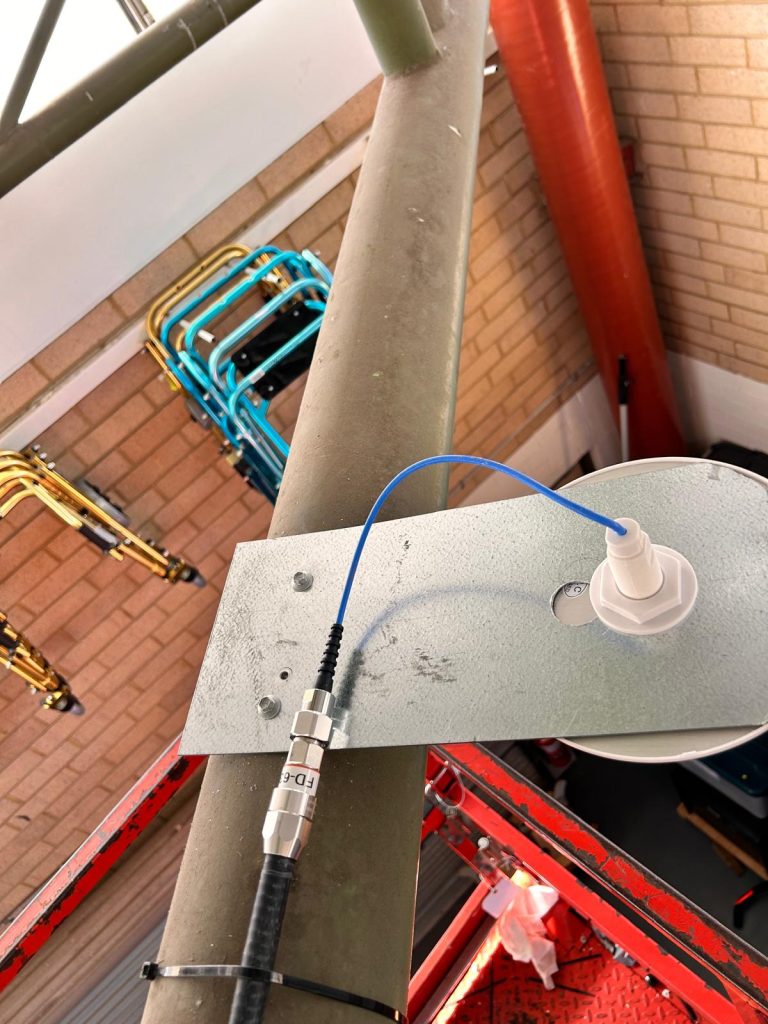
Younifi designs multi-carrier readiness into every Quatra deployment from the start. The Cel-Fi Quatra platform supports up to four independent carrier connections in a single system, and because the additional donor antennas and cabling are comparatively minor works, it costs little more to build a system ready for Telstra, Optus and Vodafone from day one than to build for a single carrier and retrofit later.
Built to Scale
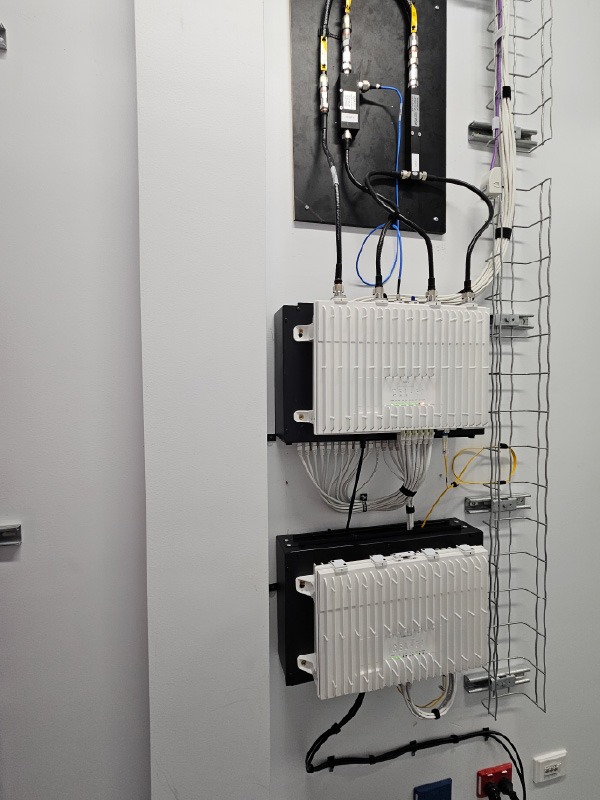
Residential developments change over time — additional stages, changing floor plans, or increased usage in common areas. A Quatra DAS is modular: additional coverage units and antennas can be added to extend the system without replacing the core infrastructure, so a building’s coverage system can grow with it rather than being re-engineered from scratch.
Compliance and Carrier Approval
Anything that boosts or rebroadcasts mobile signal inside a building must be carrier-approved — unapproved equipment can be shut down remotely by carriers and can breach ACMA regulations. As a Telstra Partner, Younifi designs and deploys only carrier-approved Cel-Fi and Quatra systems, validated with the relevant network operators before installation, so developers and body corporates aren’t left with equipment that carriers can (and do) switch off.
Explore Coverage Solutions by Building Type
Talk to Younifi Before You Finalise Your Design
The earlier mobile coverage is considered, the cheaper and simpler it is to get right. Book a design-stage consultation and get a straightforward assessment of what a building will need — before walls go up, not after residents complain.