

Mobile Coverage for Mining Camps and Remote Sites
Mining camps and remote sites face a different coverage problem to city buildings. It’s less about steel and glass, and more about distance, terrain and scale — the nearest tower might be many kilometres away, and a single site can span an accommodation village, a processing plant, open pit or underground workings, and roads and haul routes in between. Younifi designs connectivity for exactly this kind of environment, drawing on real deployments across mining and resources sites in WA.
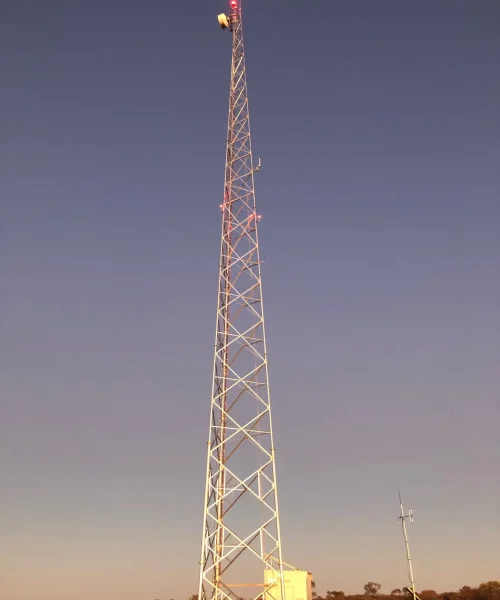
Why Remote and Mining Sites Are a Different Problem
Distance from infrastructure means many sites sit well outside normal carrier coverage, so connectivity has to be built rather than simply boosted. Terrain — hills, pits and vegetation — can block signal paths in ways flat suburban geography doesn’t. Scale and mixed environments mean a single site might need coverage across an accommodation camp, workshops and site offices, open-cut or underground areas, and vehicles moving between them, each with different requirements. And safety-critical communication for site check-ins, emergency response and coordination depends on connectivity being available everywhere people work, not just in the site office.
Younifi has delivered communications infrastructure for mining and resources operations, including project work for Galena Mining, and has supported DFES with communications for evacuation centres and emergency response — related work that shares the same core challenge: reliable connectivity in demanding, often remote, environments.
WHO THIS AFFECTS
Poor mobile coverage is a recurring issue for warehouses and industrial buildings, hospitals and health clinics, schools and education campuses, mining camps and remote sites, transport depots and logistics operations, local government buildings, and multi-storey commercial buildings with basement or core areas that sit outside normal signal range.
The Solution Set for Mining and Remote Sites
Communications trailers and skids provide rapid, self-contained connectivity for camps, site offices or temporary operations without existing infrastructure. See Communications Trailers & Skids →
Distributed Antenna Systems (DAS) extend coverage across larger fixed structures like processing plants, workshops and accommodation villages. See Distributed Antenna Systems →
Vehicle coverage kits keep site vehicles, exploration teams and mobile crews connected as they move around the site rather than being tied to a fixed location. See Vehicle Coverage Kits →
Communications infrastructure builds — towers, power and turnkey builds — are the right fit when a site needs permanent, purpose-built connectivity infrastructure rather than a temporary or portable solution. See Communications Infrastructure Builds →
How This Gets Designed
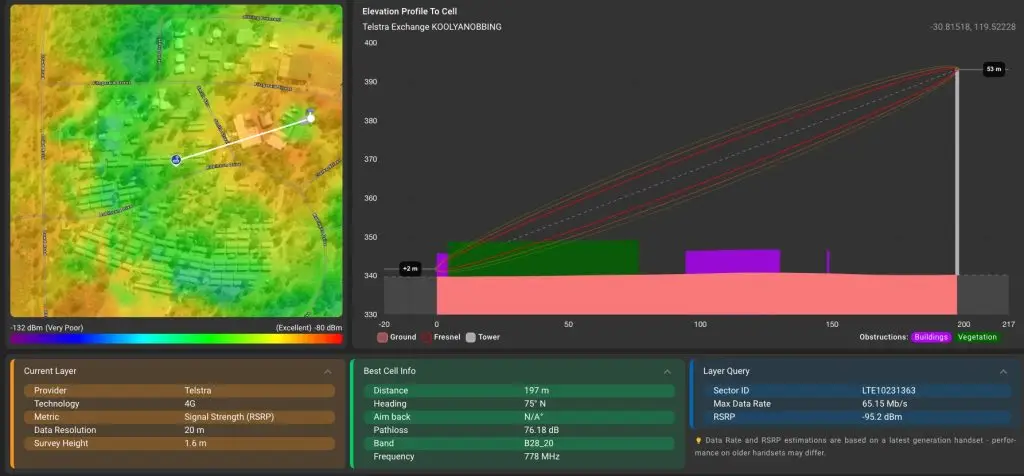
Every mining and remote site project starts with understanding the site itself, rather than a standard package:
- What needs coverage — camp, plant, vehicles, or all three
- What already exists in terms of towers or fixed links
- Which carriers need to be supported
- What the timeline and access constraints are for install and ongoing maintenance
From there, Younifi designs a combination of the above rather than a single off-the-shelf product.
What drives cost and timeframes
Cost is driven mainly by the size and complexity of the space (number of zones, floors and materials), which carriers need to be supported, and whether the site needs a single booster or a full DAS. A single-zone Cel-Fi install is typically the fastest and lowest-cost option; multi-zone DAS projects take longer because of the site survey and design work involved, but suit large or high-occupancy buildings where a single booster won’t reach. Younifi can give an indicative cost range once a site survey has been done — trying to price this without one usually leads to the wrong-sized system.
Common mistakes and risks
The most common mistake is installing an uncertified or non-carrier-approved booster. These can be switched off remotely by the carrier if they interfere with the network, and in some cases contravene ACMA rules — leaving a business with equipment it can’t legally run. The second most common mistake is undersizing the system for the space, which means the black spot moves rather than disappears. A proper site audit avoids both.
Related services
If the coverage issue is part of a broader connectivity gap — no fixed internet on site, or a need for a permanent tower — see Communications Infrastructure Builds and Networking & Security.
frequently asked questions (faq's)
Do you work on active mining sites, not just camps? Yes — Younifi has delivered infrastructure for mining and resources operations covering camps, plant areas and vehicles, including project work for Galena Mining.
What if our site has no existing connectivity at all? That’s a common starting point for remote sites. Communications Infrastructure Builds and Communications Trailers & Skids are both designed for sites building connectivity from scratch rather than extending something that already exists.
Can this cover both fixed buildings and site vehicles? Yes — most mining site projects combine a fixed solution (DAS, infrastructure build, or trailer/skid) with vehicle coverage kits for teams and vehicles working across the broader site.